There have been some delays to recycling and waste collections in the district. If your bin was due to be collected and hasn't been emptied, please leave it at your usual bin collection point, our crews are coming back for it. You can check the delayed collections page for more information. We apologise for the delay and appreciate your patience and understanding.
Changes to bin collections start June 2026 - Better Recycling
The Better Recycling service launched in June 2026, enabling residents across West Suffolk to recycle more from their homes. You can watch a short film explaining how to use the service here YouTube - Suffolk's New Recycling and Waste Service. Information leaflets about the new service, including translated versions and audio described, can be found at Suffolk Recycling - Leaflets.
What has changed and when
What has changed
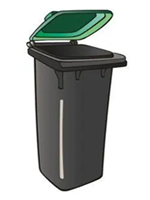
New Government policy (GOV.UK - Simpler Recycling policy) requires councils to collect food waste in a separate container and to collect paper and card separately from other recycling. For this reason, we have provided one green-lidded bin, and two grey food waste caddies.
Who has paid
The Government have provided extra funding to help set up this new service. New rules will also make packaging producers invest more towards waste and recycling.
Your new bins and collections
Most households will have:
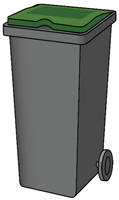
one extra 240 litre green lidded recycling bin for their paper and card - approximately 110 cm high by 59 cm wide by 75 cm deep
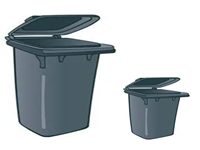
23 litre food caddy (outside) - 39 cm by 29 cm by 34 cm
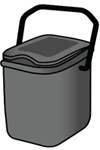
5 litre kitchen caddy (inside) - 21 cm by 25 cm by 19 cm.
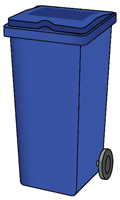
Your current blue bin will continue to be for recycling but will now also include you being able to recycle glass bottles and jars, plastic film, metal and cartons (including Tetra Pak).
Collection times
Due to the new service your bin collection days and schedules may have changed.
Households will have:
food waste collected weekly
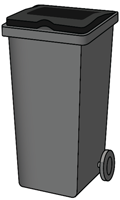
paper and card (grey recycling bin with green lid) collected once every four weeks
mixed recycling (blue bin) collected once every four weeks
non-recyclable (black bin) waste collected once every two weeks
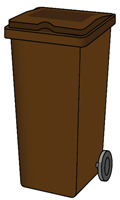
garden waste (paid for service) collected once every two weeks
Overview of new bin collections:
What goes in your bins
Your new green lidded recycling bin for paper and card
Clean and dry only:
letters, envelopes and other paper including shredded paper
cardboard
newspapers, magazines and books
cardboard egg boxes and punnets
Do not put dirty food wrappers or other items that can be recycled in with clean paper and card.
Your new Food waste bin
We have provided a small and large caddy, only the large caddy needs to be presented for collection.
These items belong in the food caddy:
leftover food, plate scrapings and peelings
meat and fish (including bones)
tea bags and coffee grounds
bread, pasta and rice
eggshells and dairy products
fruit and vegetables
pet food
Do not put windfall food (fallen fruit) in your food bin.
What can go in your blue recycling bin
glass bottles and jars
clean foil trays and drinks cans
cartons (including Tetra Pak)
plastic bottles, clean pots, tubs and trays
carrier bags
bubble wrap
empty food bags, such as cereal, pasta, mixed salad, frozen chips and frozen peas
tin foil
General waste (non-recycling)
Please only use this bin for waste that cannot be recycled for example:
bagged animal waste
bagged vacuum contents
nappies
soiled fast food containers
other non-recyclable waste
Do not put batteries, electrical items, paint, asbestos and hazardous items in this bin.
Garden waste collection (brown bin) is a subscription service
Your collection day for garden waste will not change.
Put these items in your brown bin:
dead plants and flowers
grass, leaves and weeds (excluding controlled weeds such as Giant Hogweed or Japanese Knotweed)
hedge clippings
prunings and twigs
clean sawdust (not containing pet waste)
small branches (less than 6cm thick)
vegetable waste from the garden (not kitchen waste)
Do not put food items in your brown bin unless its windfall (fallen fruit).
Do not put batteries, electrical items, paint, asbestos and hazardous items in any bin. Check how to safely dispose of these at Suffolk Recycling - What to do with? (A–Z)
Flats and communal bins
If you live in a flat or a property which shares communal bins, or we have assessed your property as unsuitable for wheelie bins, the waste containers you will use for the new service may be different.
We have reviewed bin provision for flats and communal areas. We have worked with landlords and management companies to make sure enough bins are available.
What happens to recycling
The paper and card that we collect is taken to a specialist paper recycling plant to be checked for contamination and then processed for recycling.
The recycling waste from your blue bin will still be taken to the Materials Recycling Facility (MRF). Items are separated and checked for contamination and then sent on to companies who recycle them. The MRF is being re-designed to sort the glass, plastics, metal and cartons collected in the blue recycling bins.
What happens to non-recycling in your black bin
Waste from your black bin goes to the energy from waste plant in Great Blakenham. Waste is then incinerated to generate electricity.
We do not send waste to landfill.
Food waste collection and processing
Food waste is collected weekly in the new food waste bins. It goes to an anaerobic digestion plant - a process that breaks down food waste to make biogas and bio‑fertiliser. Biogas can power vehicles, make electricity or supply gas. Bio‑fertiliser is used on farmland.
Managing and reducing your recycling and waste
Reduce your waste:
buy only what you need. Choose items with less or recyclable packaging
wash and squash plastic bottles, tubs and cartons
nest similar shaped items (for example yoghurt pots)
flatten cardboard boxes
plan meals and freeze leftovers. See Love Food Hate Waste and Food Savvy for tips
if you have extra rubbish take it to your local Recycling centre
place any excess paper and card you have collected, ideally in a cardboard box, at your bin collection point on your green-lidded bin day and it will be collected if it is clean and dry.