
8. Connectivity in West Suffolk
Key baseline data sources used in this section:
8.1. Connectivity across West Suffolk shows a clear difference between towns and rural areas. Evidence from the Department for Transport Connectivity Tool indicates that the main towns generally have better access to employment, services, and facilities, reflecting their concentration of jobs, services, and transport infrastructure and their proximity to main roads and rail routes. In contrast, rural areas tend to have more limited accessibility due to longer distances and fewer transport options.
8.2. The maps below use colour shading to show relative levels of accessibility, allowing comparisons between different areas rather than presenting exact travel times or pass and fail measures. Green areas indicate higher relative accessibility, blue areas moderate accessibility and purple or darker areas lower accessibility. Overall, the evidence highlights broad spatial patterns of connectivity across the district, with stronger accessibility in towns and more constrained access in rural locations.
Figure 19: shows relative access to employment with lighter colours indicating better accessibility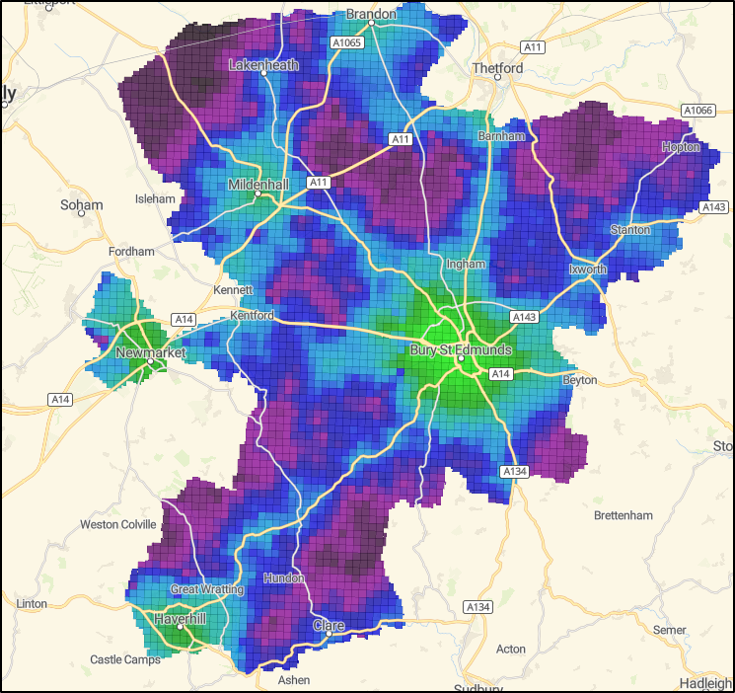
Source: Department for Transport connectivity Tool
Figure 20: shows relative access to education facilities, with lighter colours indicating better accessibility, mainly around the main towns, and darker colours showing more limited access in rural areas.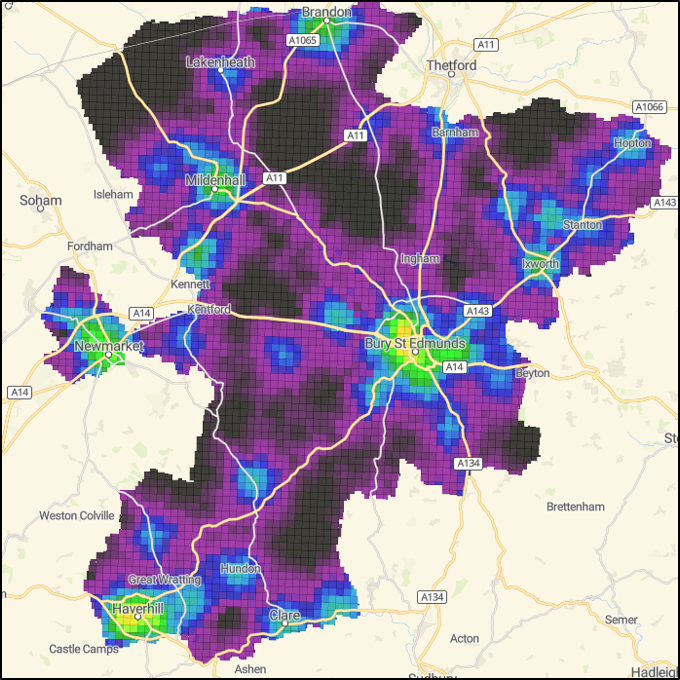
Source: Department for Transport connectivity Tool
Figure 21: shows relative access to health services, with higher accessibility concentrated around the main towns and lower accessibility more common in rural locations.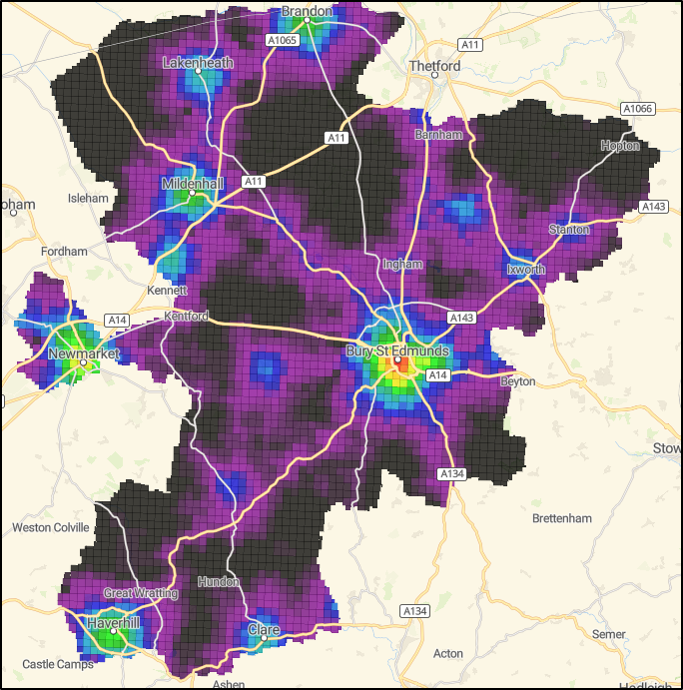
Source: Department for Transport connectivity Tool
Figure 22: shows relative access to leisure facilities, with patterns again highlighting stronger accessibility in the towns and more limited access in rural areas.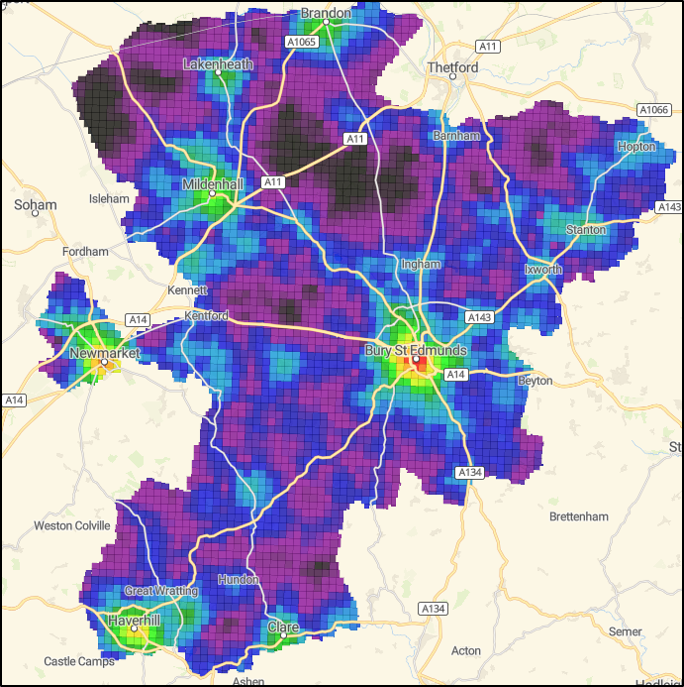
Source: Department for Transport connectivity Tool
8.3. Overall, the Department for Transport Connectivity Tool provides baseline evidence of clear differences in accessibility between towns and rural areas in West Suffolk, illustrating broad spatial patterns of access to employment, services and facilities across the district.
Back to West Suffolk Local Plan 2045 Baseline Data 2026 homepage