
1. Introduction to the baseline data for West Suffolk Local Plan 2045
1.1. This report provides a baseline of social, environmental and economic characteristics of West Suffolk and will be used to inform work on a new local plan for the district. Commentary is included on those issues identified in Government advice on gathering baselining information (appendix 5) to inform a local plan.
1.2. The gathering of this baseline data is being undertaken as part of the initial stages of getting ready for the commencement of the 30-month local plan making process in November 2026, so we can build up existing and future pictures of the area. It provides an understanding of current conditions, key trends and the main constraints and opportunities that will affect future growth in the district.
1.3. This report also reflects key baseline information contained in the West Suffolk Strategic Environmental Assessment (SEA) Scoping Report 2026. The SEA scoping is the first step in the environmental assessment process and sets out the scope and level of detail of the information to be included in the future strategic environmental assessments of the local plan.
1.4. Links to the sources of baseline data used are provided at the start of each section. The baseline information will be updated and maintained as the local plan progresses with further analysis of each of the identified topic areas as necessary.
The plan area
1.5. West Suffolk lies within the county of Suffolk in the East of England. The local plan area covers approximately 1,035 square kilometres with a combined population of around 188,485 (Office of National Statistics (ONS)) mid-year estimate 2024).
1.6. West Suffolk is a predominantly rural district with six towns: Bury St Edmunds, Haverhill, Newmarket, Brandon, Mildenhall and Clare, the smallest town in Suffolk. Its villages range from larger settlements like Ixworth with a good range of local shops and facilities, to smaller villages and hamlets with few or no local shops or services.
1.7. West Suffolk shares a boundary with three counties – Essex to the south, Cambridgeshire to the west and Norfolk to the north.
1.8. Within the district and immediately adjacent there are several internationally, nationally and locally important sites including Ramsar sites, special protection areas, special areas of conservation, sites of special scientific interest, geological sites of special scientific interest and national nature reserves.
1.9. West Suffolk has more than 3,500 listed buildings and structures, but the historic environment is more than buildings. The settings of buildings, the green ‘gaps’ around buildings, and the individual characteristics of historic areas as part of or together with the nearly 50 conservation areas make West Suffolk a special and cherished place for many residents and visitors.
Figure 1: map showing West Suffolk District Boundary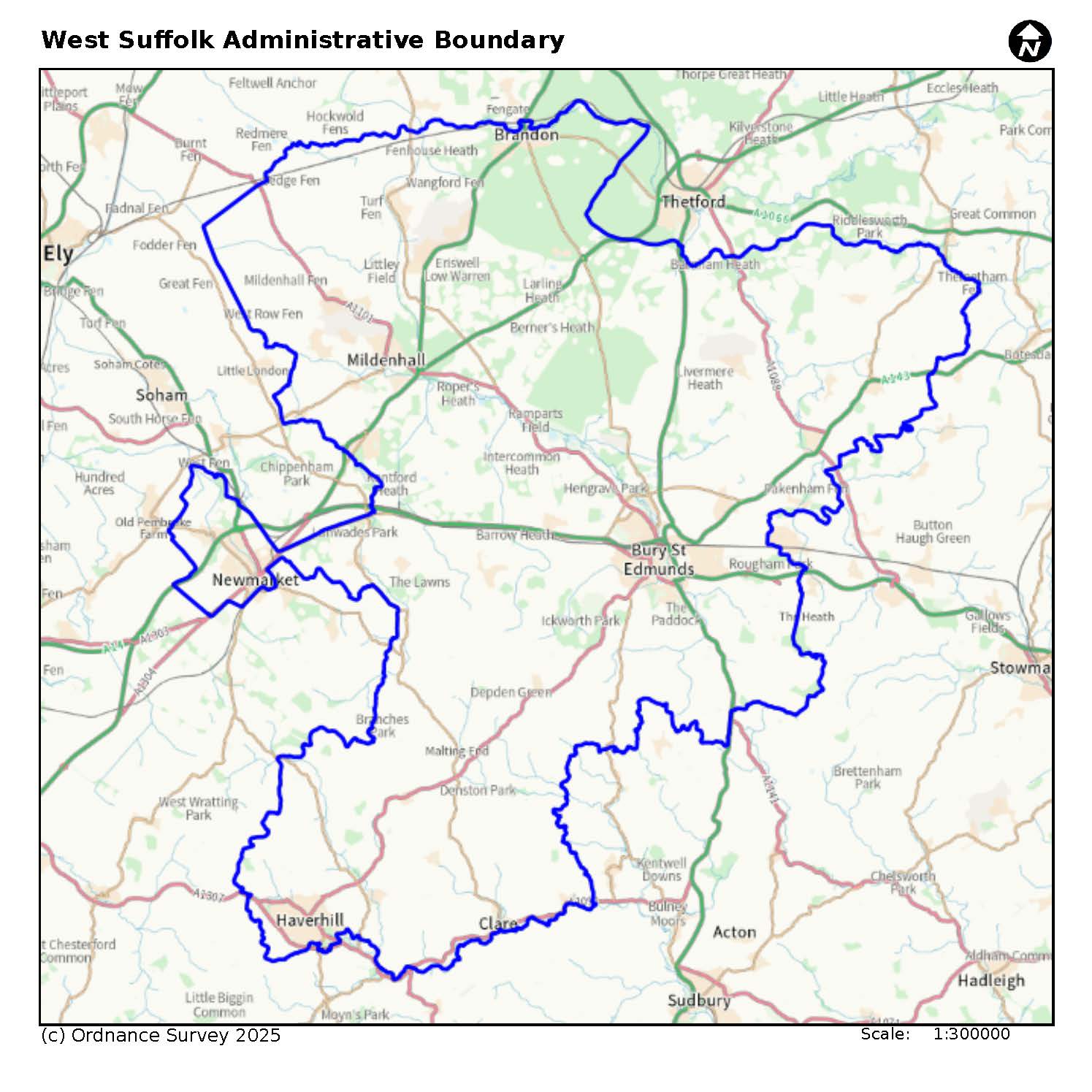
Source: West Suffolk Council
Back to West Suffolk Local Plan 2045 Baseline Data 2026 homepage