
2. Population statistics for West Suffolk
Key baseline data sources used in this section
- West Suffolk Strategic Environmental Assessment (SEA) Scoping Report 2026
- Census 2021 – West Suffolk data summary
- How life has changed in West Suffolk: Census 2021
- Census Maps - Census 2021 data interactive, Office of National Statistics
- Population projections - Office for National Statistics
Most up to date population for district
2.1. The 2021 Census showed the usual resident population of West Suffolk to be 179,951 This is an increase of 9,195 or 5.3 per cent since the 2011 Census. Since 2001 the population has increased by 26,240 or 17.1 per cent. As of the mid-year estimate 2024 the population of West Suffolk was 188,485 (Office of National Statistics (ONS)) mid-year estimate 2024), representing an increase of 8,534 people (4.74 per cent) between 2021 and 2024.
Figure 2: West Suffolk population change (1991 to 2021)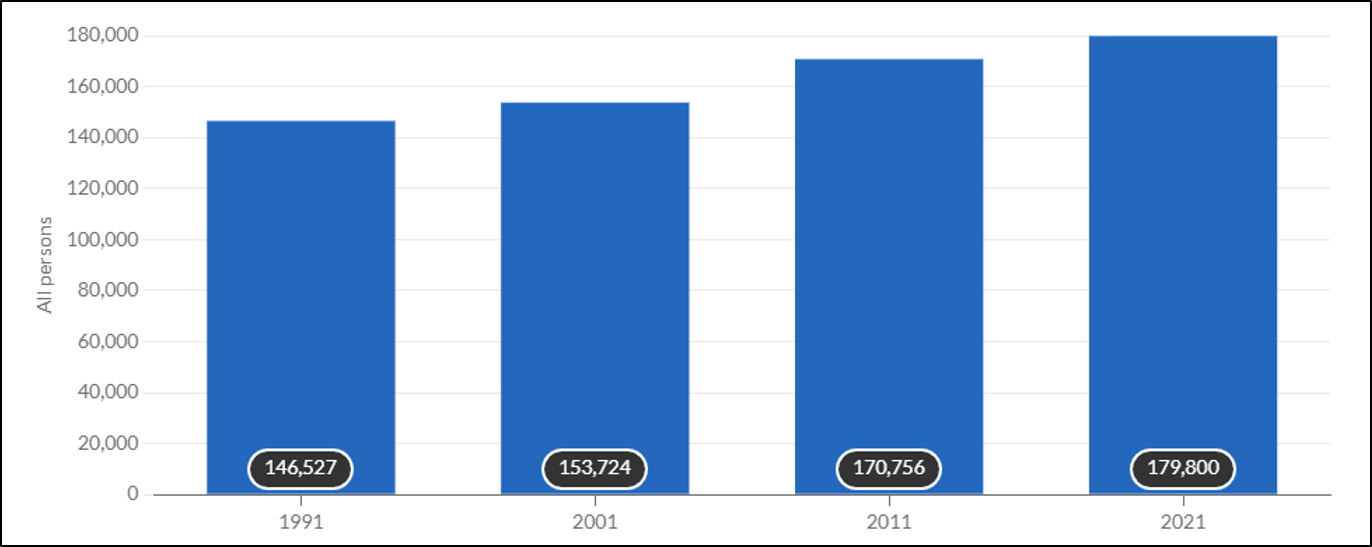
Source: Suffolk Observatory
2.2. Recent growth has been concentrated in the main towns with Bury St Edmunds seeing an increase from 40,944 (2020) to 43,824 (mid 2024), Haverhill increased from 27,329 (2020) to 28,684 (mid 2024), Brandon from 9,059 (2020) to 9,350 (2024) and Newmarket from 16,142 (2020) to 17,780 (mid 2024). However, trends may vary across the district as some settlements have experienced more limited growth or decline, for example, Mildenhall saw a decrease from 11,338 (2020) to 9,107 (mid 2024). Overall, this data indicates a pattern of growth concentrated in key urban areas, alongside more mixed trends across smaller settlements.
2.3. The distribution of the population across West Suffolk is: Bury St Edmunds 23.2 per cent, Haverhill 14.7 per cent, Newmarket 9.3 per cent, Brandon 5.4 per cent, Mildenhall 4.9 per cent, and villages and outlying areas 42.5 per cent.
Figure 3: distribution of population in West Suffolk in percentage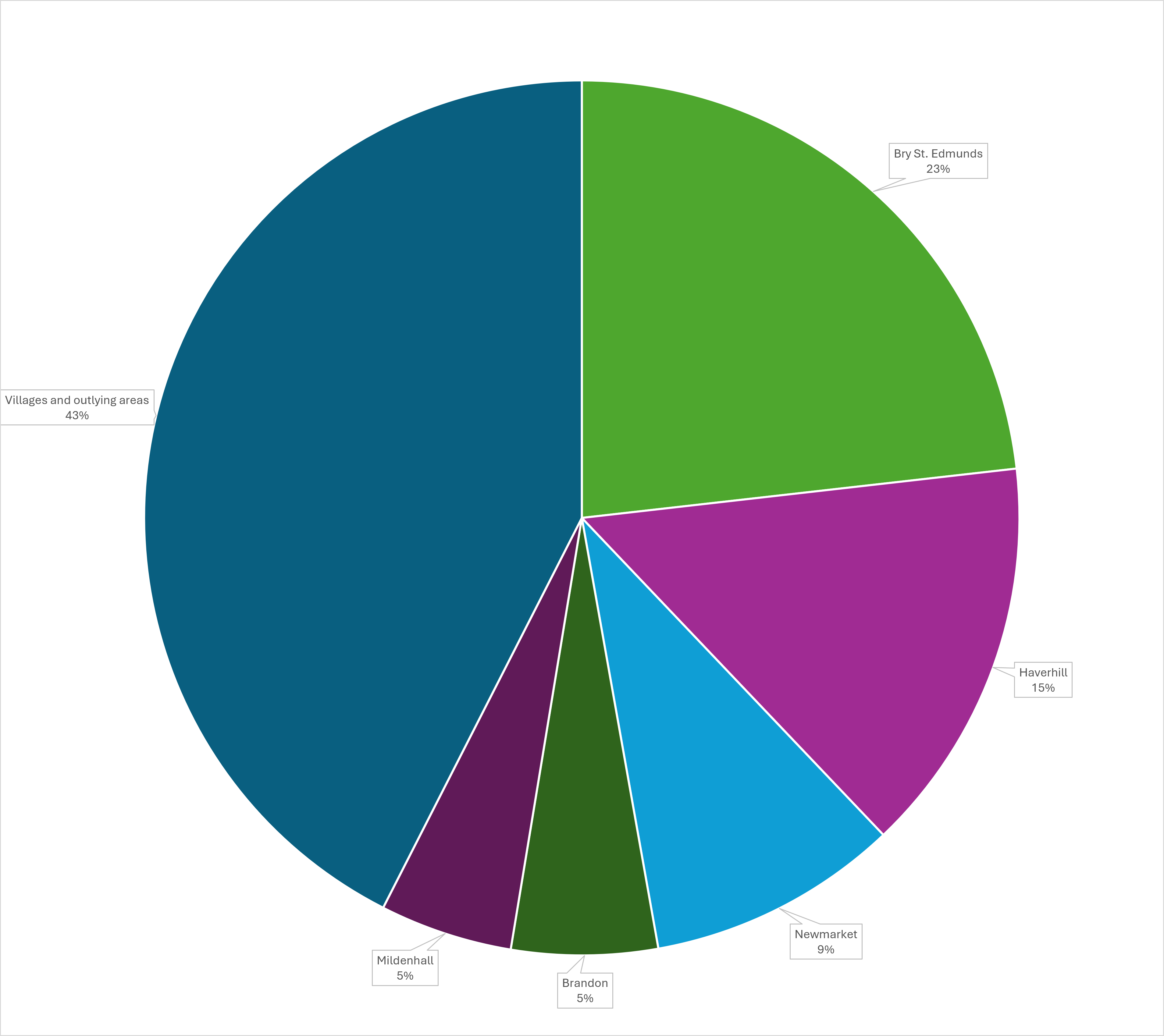
Source: The 2021 Census
Overall population change by ward
2.4. Population estimates at ward level indicate that across West Suffolk there is an overall upward growth but the level stays around 180,000.
2.5. Several wards have experienced notable population growth with the largest increases being in Moreton Hall (Bury St Edmunds) which has increased from 5,911 (2020) to 8,243 (2024) indicating large scale growth, Haverhill North has increased from 4,227 (2020) to 5,553 (2024) and St Olaves (Bury St Edmunds) has increased from 5,048 (2020) to 6,723 (2024).
2.6. Other wards such as Ixworth and Stanton have maintained a stable population from 2020 to 2024. Some wards have seen a decline in population, for example Pakenham and Troston has declined from 3,280 (2020) to 2,941 (2024) but growth elsewhere offsets this. Overall, the data demonstrates that population growth has been concentrated in key growth locations, particularly within and around the main towns, with more varied trends across rural areas.
Population change in age groups
2.7. The 2021 Census showed that 20.7 per cent of West Suffolk’s population was aged 65 and over, above the England average of 18.4 per cent, and this is projected to rise to 23.3 per cent by 2027. Between 2020 and 2024, younger age groups grew modestly, as illustrated on the figures below, but births fell slightly and the strongest growth was among older residents, with those aged 75 and over increasing by 18.6 per cent. Overall, this indicates an ageing population, with implications for specialist and older persons’ housing and for health and care infrastructure.
Figure 4: West Suffolk percentage change in population age groups (2011 to 2021)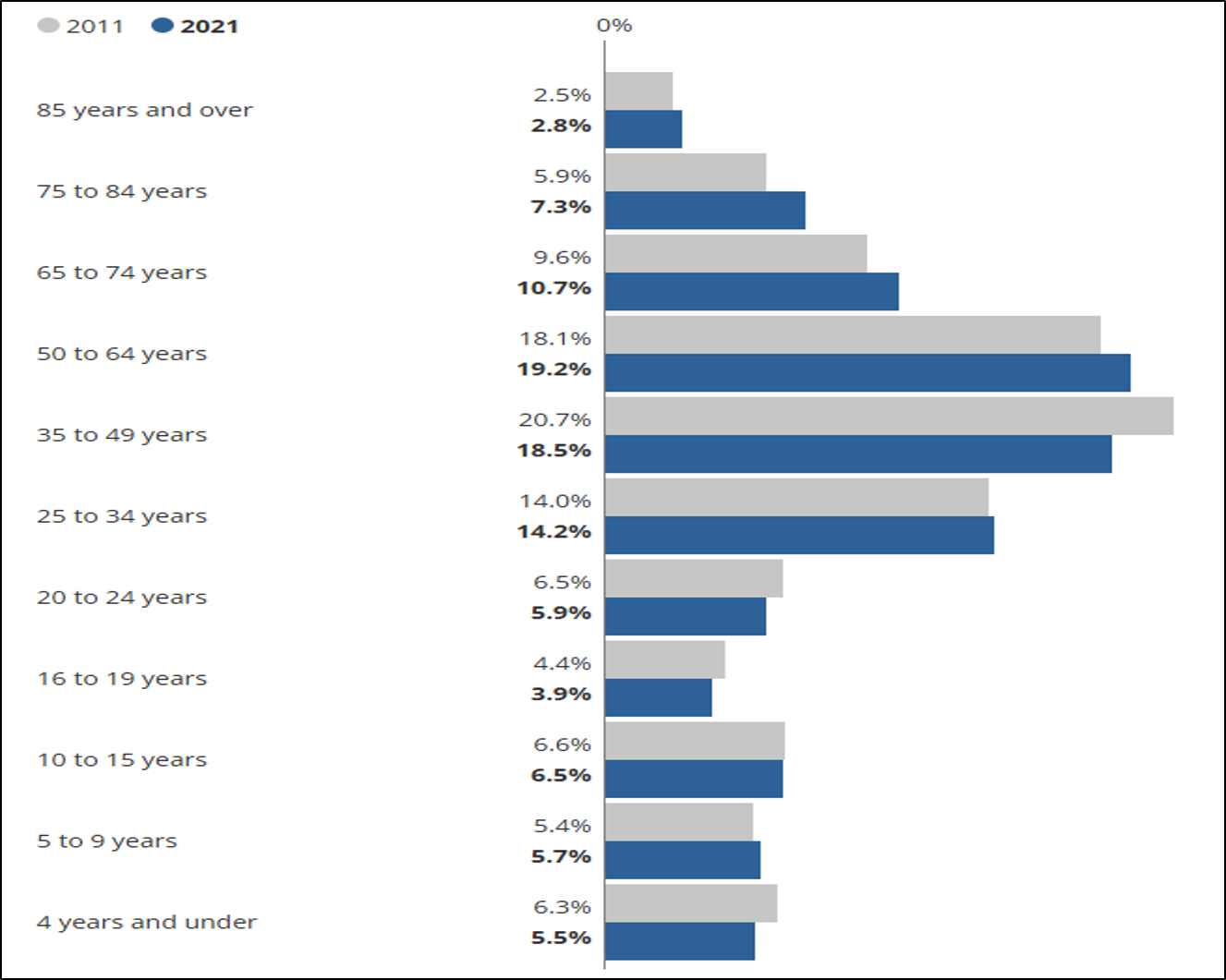
Source: How life has changed in West Suffolk: Census 2021
Figure 5: population by broad age group for West Suffolk 2024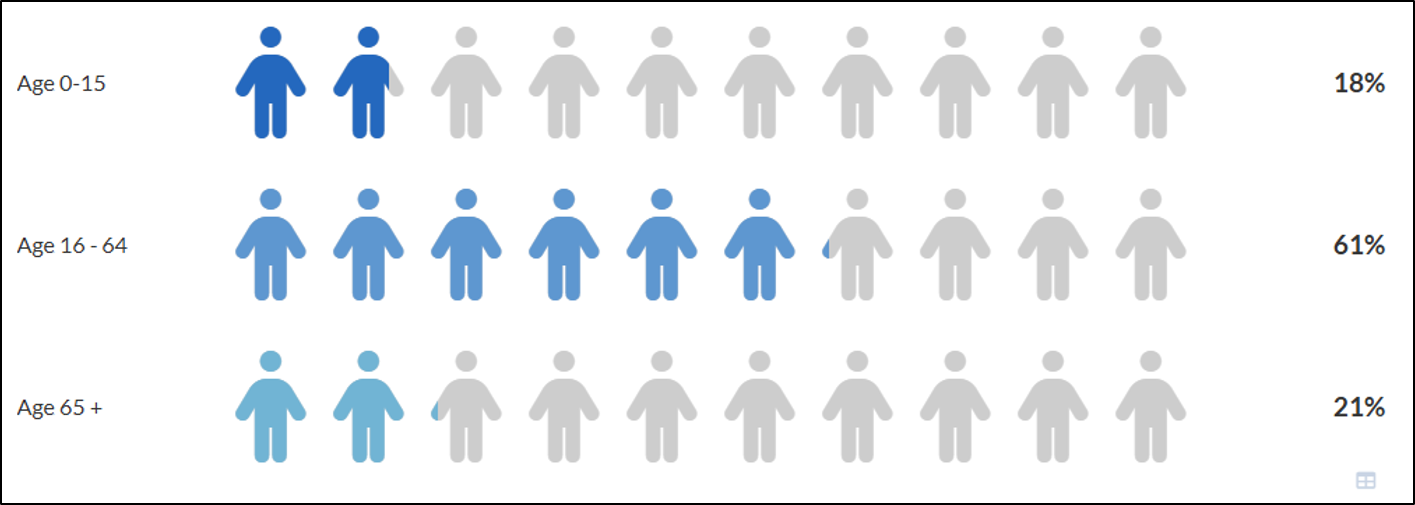
Source: Suffolk Observatory
Changes in household size
2.8. As shown in the figures below, the 2021 Census shows that household sizes in West Suffolk are predominantly small, with two-person households the most common (28,502), followed by one-person households (25,490). Three and four person households were less common, totalling 11,494 and 9,288 respectively, while larger households were relatively rare. Only 88 households in West Suffolk had eight or more people.
Figure 6: West Suffolk Household Size (2021)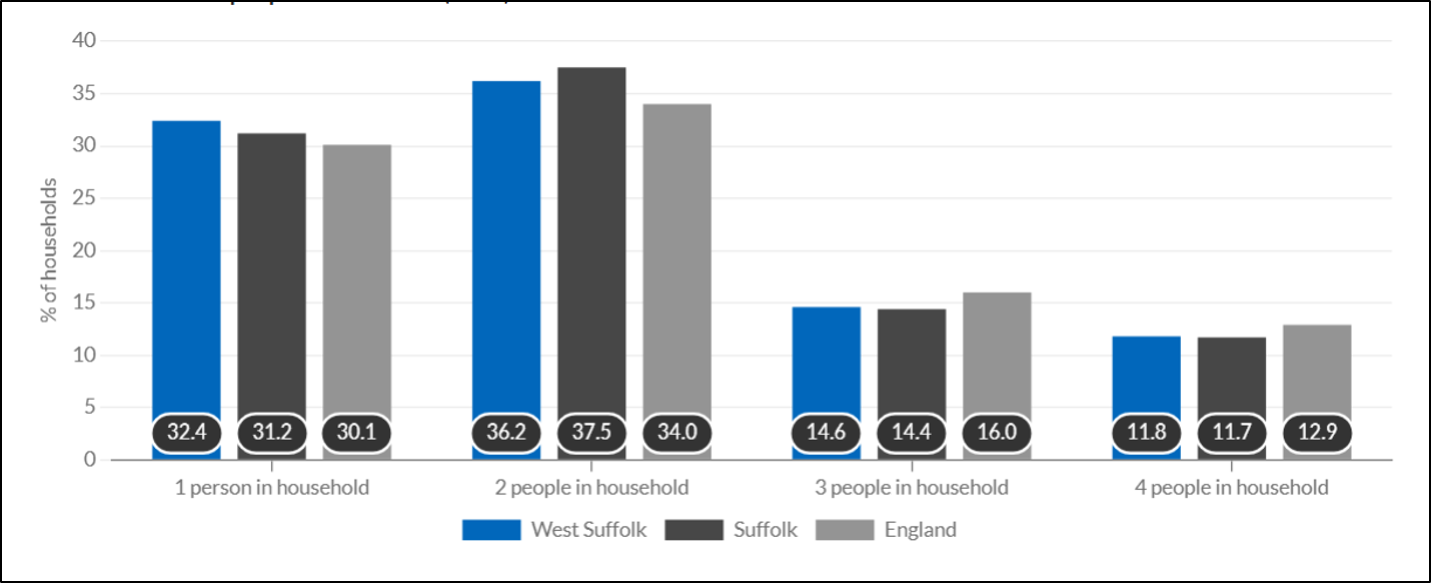
Source: Suffolk Observatory
Figure 7: West Suffolk households with five or more people (2021)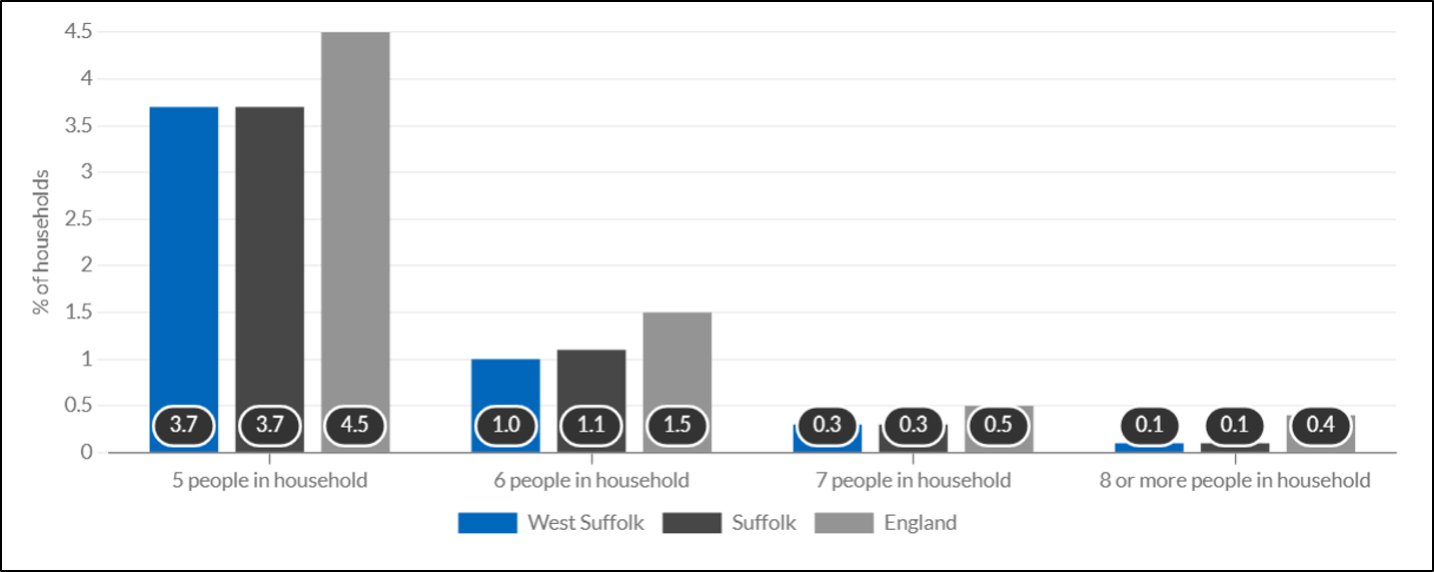
Source: Suffolk Observatory
Figure 8: percentage of West Suffolk households by composition (2011 to 2021)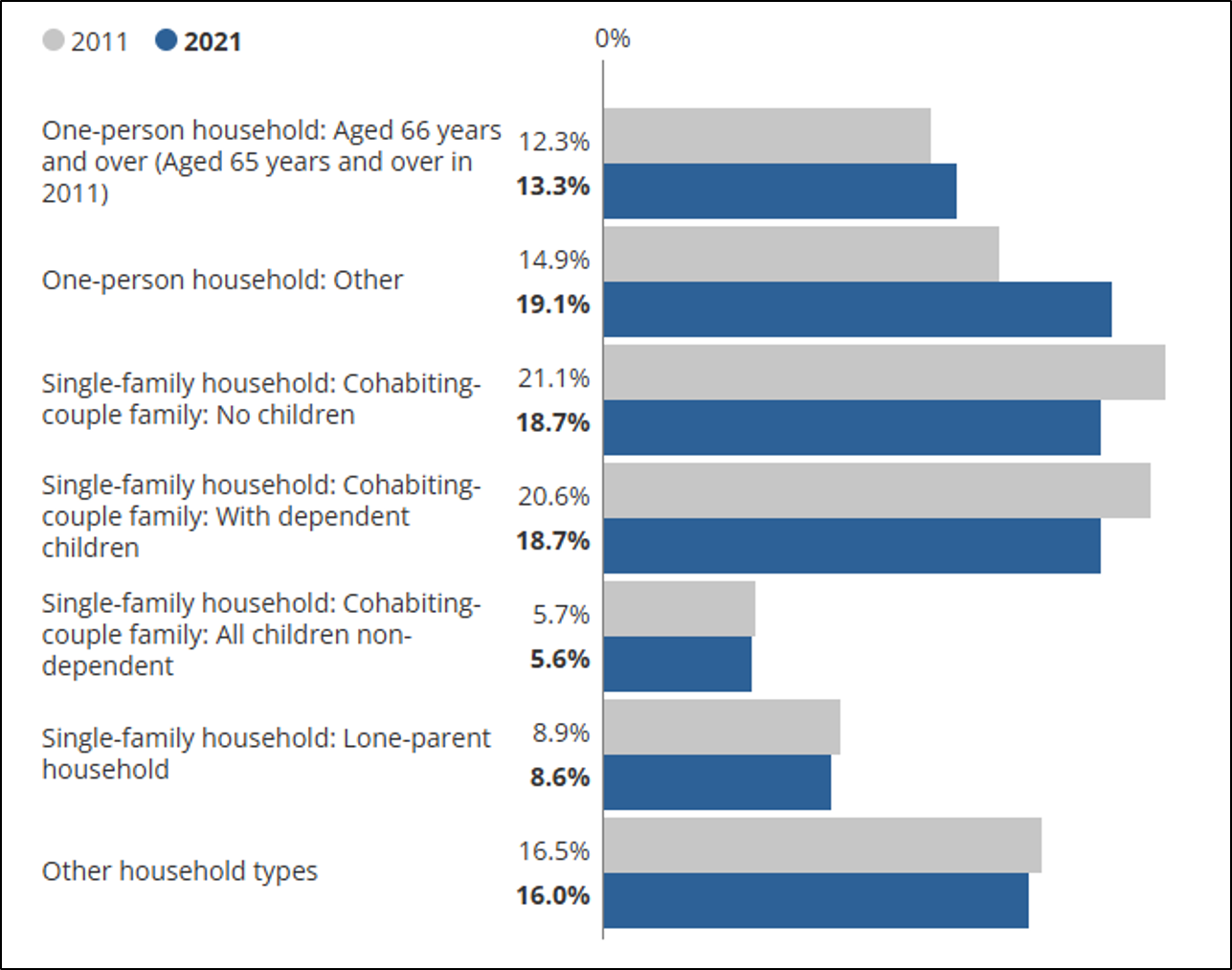
Source: Suffolk Observatory
Population projection for West Suffolk
2.9. The population projections for West Suffolk based on the subnational population projections methodology (SNPPs). These data presented in this report are 2022 based.
2.10. The population in West Suffolk is projected to rise from 182,328 in 2022 to 209,820 in 2047, a 15 per cent increase compared to the England projections (13 per cent), however:
- The population aged 0-14 in West Suffolk is projected to fall from 30,517 in 2022 to 30,049 in 2047. This is two per cent decrease, which is lower than the national projections of 7 per cent decrease.
- The population aged 15-64 in West Suffolk is projected to rise from 113,735 in 2022 to 125,189 in 2047 – a 10 per cent increase, which is comparable to the national increase of 11 per cent.
- The population aged 65+ in West Suffolk is projected to rise from 38,076 in 2022 to 54,582 in 2047. This is a 43 per cent increase, which is higher than the projections for England at 39 per cent.
2.11. The percentage of the working age population (15-64) of West Suffolk is projected to be at 59.7 per cent while the percentage of people over 65 will reach 26 per cent in mid-2047.
Figure 9: population projection, percentage distribution by age groups in 2047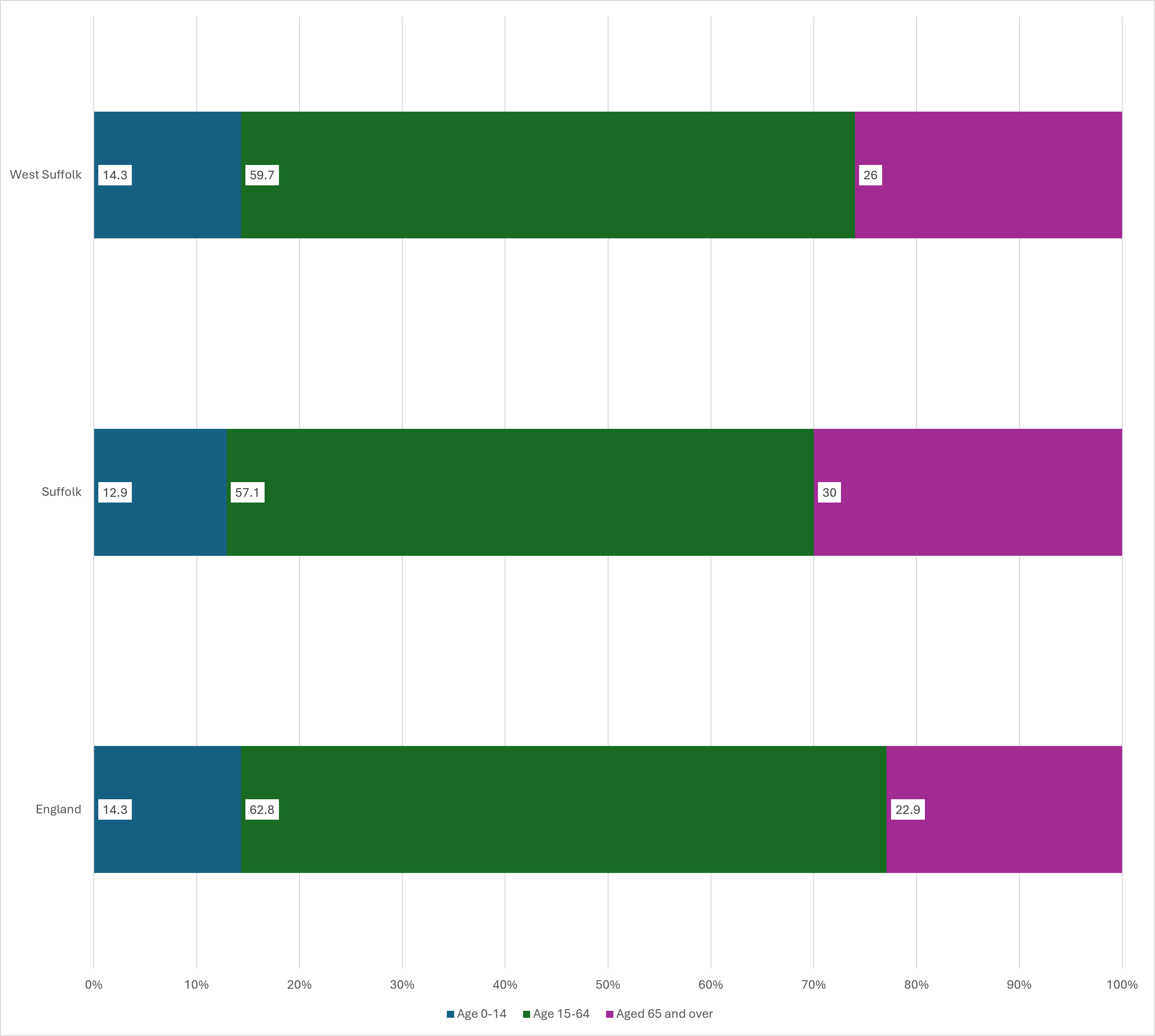
Source: Population projections for local authorities by five-year age groups and sex, England - Office for National Statistics
2.12. The projections show a rising population, but with trends towards a shrinking population of children below the age of 15. This shows a projection of lowered birth rates in the district. The working age population (15-64) is increasing, primarily due to the increase of the older population of this age group. The trend of an aging population is very evident for the population projections for people of retirement age (65+), indicating a greater need for housing for an aging population, while having a decreasing work force in the future.
Back to West Suffolk Local Plan 2045 Baseline Data 2026 homepage